

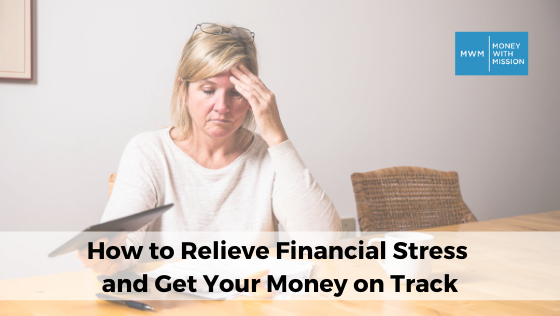
Oftentimes, we are reluctant to change and love to live in our comfort zone. Many of us do not change unless there is complete chaos, and there is no other way out.
“You never change your life until you step out of your comfort zone; change begins at the end of your comfort zone.”
― Roy T. Bennett
The common denominator with chaos is change. Either chaos makes us change something, or we change something and cause chaos so that we can get to a new, better order.
Does that make sense?
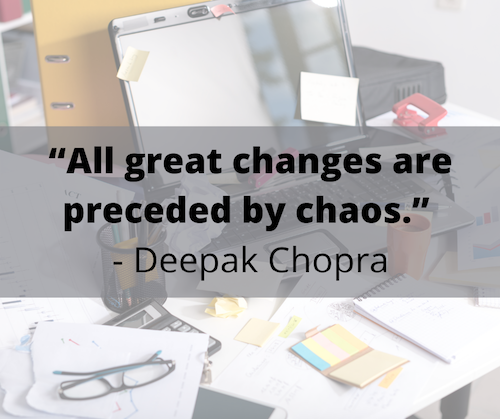
Your kitchen counter is always disorderly and disorganized… chaotic. There is just too much stuff. It can actually cause low-level anxiety. Once you organize it, get rid of stuff, or find a good place for it, you are calm, and it’s easier to get things done in your kitchen.

Or maybe you are like me, and when things are too comfortable, you know it is time to change.
This is where I am now. I just quit my job and will be relocating. Talk about chaos! I actually like to move…ok, maybe not like… but I do like purging things that do not serve me, and the only time I seem to do it is when I move.
The same can be said about your finances.
Things are ok right now. You have the 401K, and savings is where you want it to be or nearly so. You are… comfortable.
Or maybe you are not so comfortable, but you’re are afraid to move because where you are is what you know. This is the reason most people do not change the way they manage their money. You are doing what you were told, but you might feel that there must be more.
If you think about it, we are told to go to work, make money, save it and then hand it off to someone to invest it for us. Someone you haven’t established a relationship with and barely understand their strategy for investing. The investments seem like they are working on the surface, and you are making money… but is it the right investment?
I challenge you to take a better look.
I was surprised when I looked at my 401K that most of my increase was due to the money I was putting in, not from increases in the stocks. The first step is looking at where you are and what you are investing in now.
 Look at it. Do you like it, do you understand it?
If you don’t, it isn’t because there is something wrong with you. You should be able to understand, and someone should be able to explain it to you.
I’m available to help you with this.
Let’s walk through your finances where you are with what you have now. It may be the best you can do, or maybe you can do better.
Schedule a call, and together, we can see what next steps are available to you.
Another option to help you clear any financial chaos is participating in a money master class. Our good friend Kine Corder’s Embracing Wealth Master Class is worth looking into. She does the class for free every other Saturday.
If you decide to take the master class, let us know what you thought and if you find it helps clear the chaos.