

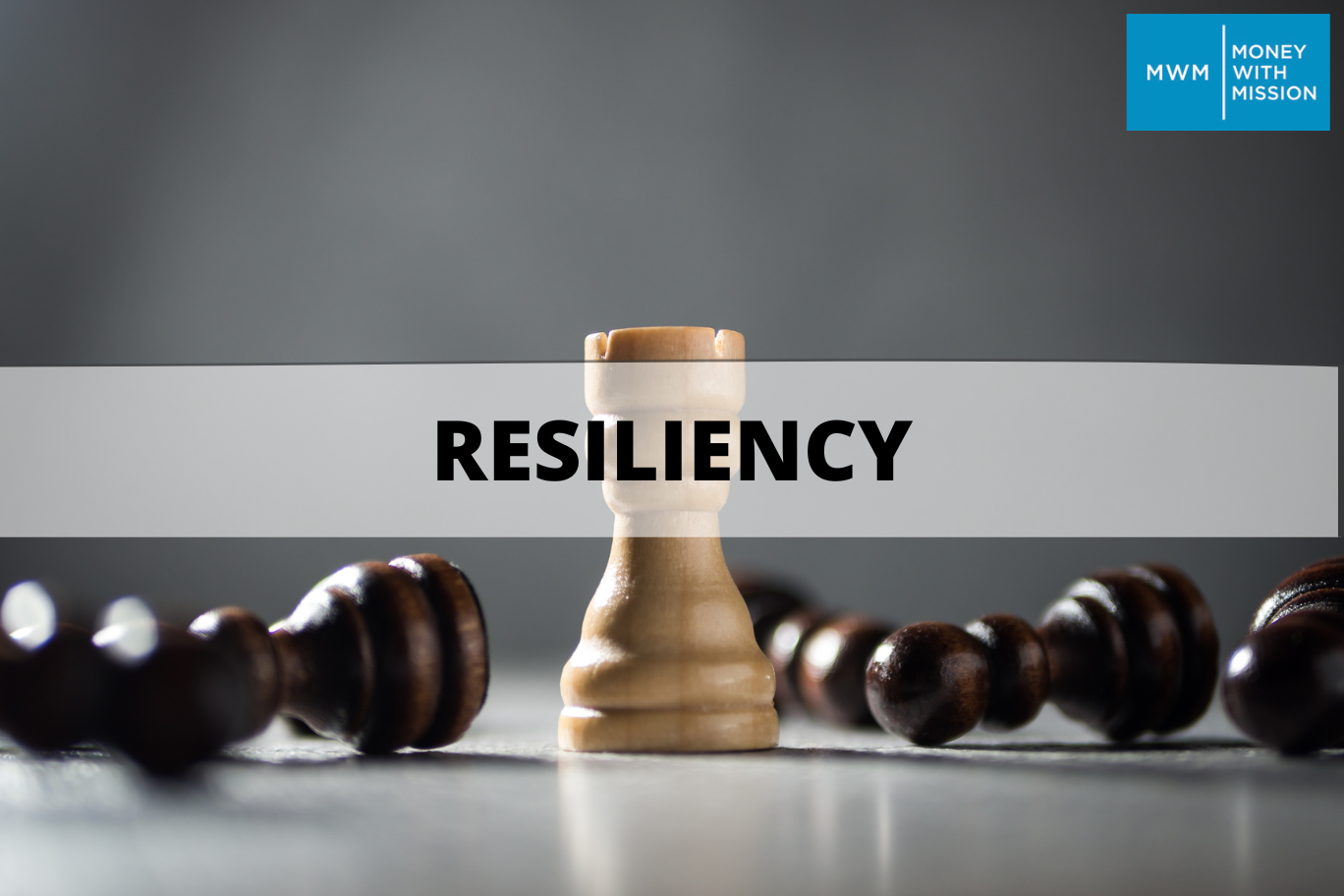
Being resilient is a concept that is tossed around quite a bit these days. According to the dictionary, being resilient means having the capacity to recover quickly from difficulties.

Having capital is one way to be resilient. But what kind of capital? The more capital you have, the better off you can be. When creating resilient wealth you can consider 8 different forms of capital, financial, intellectual, social, spiritual, cultural, material, living and experiential, as originally defined by Ethan Roland.
For me the top 3 are: social, financial and experiential capital. Followed closely by intellectual, material and living.
The most obvious capital is financial.

It is said that if you have a problem that requires money and you have money, you don’t have a problem. We get financial capital from our jobs and investments. You know that we at Money With Mission want all women to have multiple streams of income to give us options.

Social capital comes from the relationships that you form. Having relationships with people who think in ways that are complimentary to you and can help expand your thinking are important when building your social capital.

Experiential capital is knowing from having done. It can be from your own experience or you can “borrow” experience from someone network (social capital). For example, the experience of someone in your network who has been investing for years, has lost it all and recovered, can teach you to avoid similar mistakes.
My friends Regina and Dave Fabry of Campfire Properties, Money With Mission show episode from May 21, 2021, Investing in the Great Outdoors, are working on building a community for people who want to learn more about being resilient.
The pandemic has taught us a lot. We have gotten to see the problems in our world. Things we rely on may not be so reliable. Think food. It is still challenging to get some things we want. Stuff that we didn’t think about before because it was always there.
Check out what they are doing. If this is of interest to you, you could be a founding investor. Talk to Dave or Regina resilient@campfireproperties.com to learn more.