

According to a recent New York Times article, impact investments, which aim to promote a social good or prevent a social ill, have significantly outperformed traditional bets during the coronavirus pandemic.
Impact investing typically focuses on three categories: environmental, social and governance (ESG).
The stocks in these categories are performing well, with 64% beating their benchmarks compared to 49% of traditional funds through the first week of August.
The same is happening with private equity impact projects with increasing dollars being invested and returns matching or exceeding non-impact categories.
Every time there is a big problem in the world that is well advertised, impact investing increases according to Nancy E. Pfund, a managing partner and co-founder of DBL Partners.
According to an article in the Financial Times, ESG-themed Exchange-Traded Funds (ETF) had pulled in a record-setting $38 Billion in new money for the year and topped $100 Billion in total assets for the first time, according to the most recent available data from ETFGI.
Private equity funds, though, are doing as well. A farm in Texas that sells eggs from pasture-raised chickens grew through private investment and ultimately went public, in July, at an over $1 billion valuation. When the farm started in 2007, investors in large part didn’t get it. Things have changed.
Many realize the problem is with our supply chain, these problems were exacerbated by the pandemic. Our difficulty in obtaining many essential goods is concerning; medicine, personal protective equipment, and food. Realizing how fragile our food supply chain is has been a gigantic wake-up call for the US.
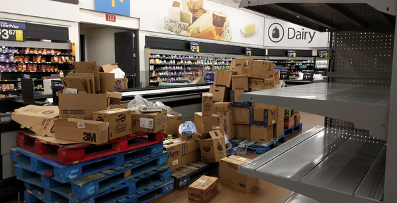
Many impact investors are looking toward sustainable and profitable agriculture as an investment.
This is the perfect time for the US to catch up with much of the world by increasing our indoor controlled farming acreage. Being able to control nearly all aspects of the growing process, growing food closer to the place it will be consumed, both improve the rate of production, the quality of the food with regard to nutrient density, and decrease carbon footprint with shorter transportation needs.
Add to that the ability to put these farms in just about any old abandoned warehouse, think value-add, and you have a win-win; an operating business, bringing well-paying jobs in a building that has been an eyesore and a great investor return, backed by real estate.
If this is interesting to you, check out this video. If improving the US supply chain with regard to healthy food is important to you and you want to give your money a mission, let’s talk.
For the latest updates on COVID-19, visit www.cdc.gov.